This article may contain affiliate links. If you buy through them, guitar.care may earn a small commission at no extra cost to you.
Why Most Gig Bags Carry the Wrong Kit
A gigging emergency kit needs six things: a full spare set of strings already stretched and broken in, a string winder, a clip-on tuner, contact cleaner, spare 9V batteries if anything onboard runs on one, and a small screwdriver/hex set. Everything else is dead weight that eats gig-bag space without fixing a failure that actually happens on stage.
The short answer
- Backup strings to carry
- One full set, already stretched
- Spare 9V batteries
- 2-6, more if pedals are in the chain
- Fastest fix for a dead signal
- Swap the battery before touching a cable
- String winder saves
- Real minutes during a between-song change
- Skip packing
- Full setup kit, spare tuning machines, spare nut
Most gig-bag kits grow the wrong way: something goes wrong on a bad night, a player throws whatever seems related into the bag, and the pile keeps growing without anyone ever taking something out. What actually goes wrong on stage is a short list — a string breaks or a fresh one won't hold pitch, the signal goes dead or crackly, the tuning drifts between songs, or a screw or strap comes loose. If you haven't settled what the kit rides in, choosing between a gig bag and a hardshell comes first. Pack for those four failures specifically, not for a home workshop you're carrying to a gig you'll never use it at.
A Broken String Mid-Set: What Actually Gets You Back Playing
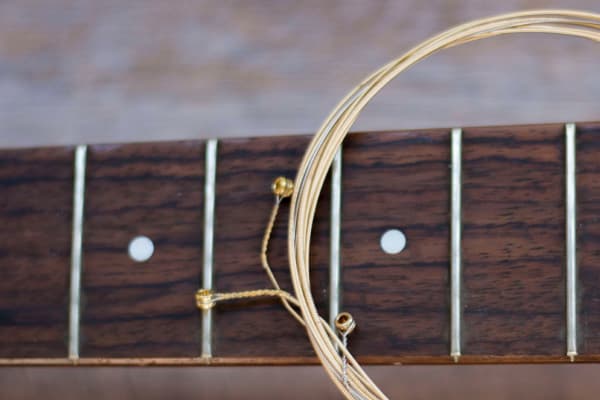
The string that saves a set isn't just a spare in the bag — it's one that's already been played in. Stay Tuned Guitar's explainer on string stretching puts the mechanism plainly: "Fresh strings tend to stretch naturally with use, causing the guitar to fall out of tune frequently during the initial period of playing. By manually stretching the strings, you accelerate this settling process, achieving a stable pitch more quickly." A string pulled straight from its packet and installed between songs will keep sliding out of tune through the next two or three numbers — install it days before the gig, stretch it by hand, and let it settle on a guitar that's just sitting in the stand.
Carrying more than one spare set isn't overkill either. Stringjoy's case-essentials guide is direct about it: "I recommend carrying two full sets, and do so with personal conviction." One pre-stretched set covers a single broken string; a second covers a full restring if something takes out more than one at once, or covers a bandmate who forgot theirs.
Top pick
String Winder & Cutter
Turns a 30-minute string change into a 10-minute one, with clean cuts at the posts.
None of that matters if the change itself eats five minutes you don't have between songs. Stringjoy makes the same point about tools: "One thing a multitool lacks is the time-saving technology of a string winder." A coated set is worth packing specifically for the bag, too — an uncoated set that's ridden around in a gig bag through a few humid load-ins can corrode before it's ever used. For the swap itself, our full restringing walkthrough covers the bridge-pin and post-winding steps this kit assumes you already know.
A Dead or Crackling Signal Mid-Song
When the sound cuts out or crackles, check the cheapest and most common cause first: a battery. Any acoustic-electric with an onboard preamp, or any pedal running on a 9V, goes silent the moment that battery dies — usually mid-song, never during a soundcheck. Our guide to acoustic-electric onboard systems covers checking the indicator light before assuming the pickup itself has failed; the same logic applies to a pedalboard. Stringjoy's advice on quantity is worth following: "If you play with pedals or active pickups, keep at least one or two extra batteries in your bag." A guitarist running only passive pickups needs none of this — don't pack batteries for a system that doesn't use them.
Recommended gear
Electronic Contact Cleaner
Clears crackling pots and noisy switches in seconds. A can lasts years.
If the battery's fine and the signal is still crackly or intermittent, the next suspect is a dirty jack or a corroded cable end, not a dying pickup. A few seconds of contact cleaner on the plug and inside the jack clears most of it on the spot; our electronics maintenance guide covers the fuller diagnosis for pots and jacks once you're home and not mid-set.
Drifting Out of Tune Between Songs
A guitar that won't hold pitch through a set is rarely the tuners' fault by itself — nut binding, fresh strings still settling, or a trem that's out of balance are more common culprits, and our tuning-stability diagnosis walks through each one. What a gig-bag kit can't skip is a way to check pitch fast between songs without killing momentum.
Recommended gear
Clip-On Tuner
Accurate, always on the headstock, and essential for checking intonation during setups.
A headstock tuner clipped and left in place between sets beats digging a pedal tuner out or trusting your ear under stage noise. It's also the fastest way to confirm a "buzzing" or "off" string is actually a tuning problem and not a setup issue before you start troubleshooting the wrong thing onstage.
The Small Tools That Actually Get Used
Past strings, batteries, and a tuner, the kit should stay small on purpose. A compact multi-bit screwdriver or hex set covers a loose strap button, a slipping tuning peg screw, or an intonation screw that walked during transport — the three fixes a player is actually likely to make between songs. Duct tape earns a spot for the same reason gigging musicians keep reaching for it: in Premier Guitar's rundown of what's actually in a working go bag, the author sums up why the odd-seeming items stay packed — "I've used all of it at one time or another." That's the actual bar for anything going in this kit: not "might need it someday," but "have needed it before."
What to Leave at Home
A full setup kit — feeler gauges, a truss rod wrench set, a string action ruler — belongs in the DIY setup toolkit, not a gig bag. None of that work happens between songs or in a venue parking lot, and carrying it "just in case" is exactly the accretion this kit is supposed to avoid. Same goes for spare tuning machines, a spare nut, or anything that requires more than a few minutes and better light than a backstage hallway offers. If it's a repair rather than a fix, it waits until you're home — our care guides go deeper into that fuller setup and maintenance routine once the gig is over.
Packing the Kit You'll Actually Reach For
The test for anything going into this bag is simple: would you actually stop and use it between songs, or are you carrying it for peace of mind you'll never collect on? A pre-stretched spare set, a winder, a tuner, contact cleaner, spare batteries if you need them, and a small screwdriver set cover every failure that realistically happens on a stage. Everything past that is weight you're carrying for a repair you'll make at home anyway.