This article may contain affiliate links. If you buy through them, guitar.care may earn a small commission at no extra cost to you.
Fretboard Care Depends on the Wood
What a fretboard needs depends entirely on what it's made of. Rosewood and ebony are unfinished and want conditioning once or twice a year. Maple is usually sealed and wants the opposite — clean it, don't feed it. Getting that backwards is how players damage a board they meant to protect.
The short answer
- Rosewood and ebony
- Condition 1-2x per year
- Finished maple
- Clean only, never oil
- Lemon oil
- Avoid, per Martin's own FAQ
- Best moment to do it
- At a string change
Why Fretboard Wood Is Different From the Rest of the Guitar
Guitar bodies and necks are almost always sealed under a finish — nitrocellulose, polyurethane, or an oil finish — that controls how much moisture the wood absorbs or loses. Fretboards on most steel-string guitars skip that step. Rosewood, ebony, and similar open-pore woods are left raw so they feel right under your fingers, which means they're directly exposed to whatever's in the air and whatever's on your hands.
That exposure cuts both ways. A raw board dries out faster in a heated room in January, and it also picks up finger oils, dead skin, and sweat faster during regular playing. Neither extreme is good: an over-dry board can shrink enough that fret ends start to feel sharp or the wood shows fine surface cracks, while a board that's never cleaned builds up a grimy film that dulls the wood's color and clogs the grain.
Rosewood and Ebony: What Fretboard Conditioning Actually Does
Conditioning a rosewood or ebony fretboard isn't about "feeding" thirsty wood the way the word suggests — it's about slowing moisture exchange at the surface so the board doesn't react as sharply to humidity swings. A thin oil layer partially seals the open pores, which helps the wood shed built-up grime during cleaning and keeps it from drying out as fast between conditioning sessions.
That means less is more. A board that gets a light treatment two or three times a year, timed to string changes, does better long-term than one that gets oiled every week. Over-oiling can leave a sticky residue that attracts more dust than it prevents, and it does nothing extra for wood that's already stable.
Top pick
Fretboard Conditioner
A dedicated fretboard conditioner, applied sparingly a few times a year, is the safest and most predictable option for rosewood and ebony.
How to Condition Rosewood or Ebony
This is easiest during a string change, when the board is fully exposed — and it's also the easiest time to give tarnished frets a quick polish while you're already in there with the strings off:
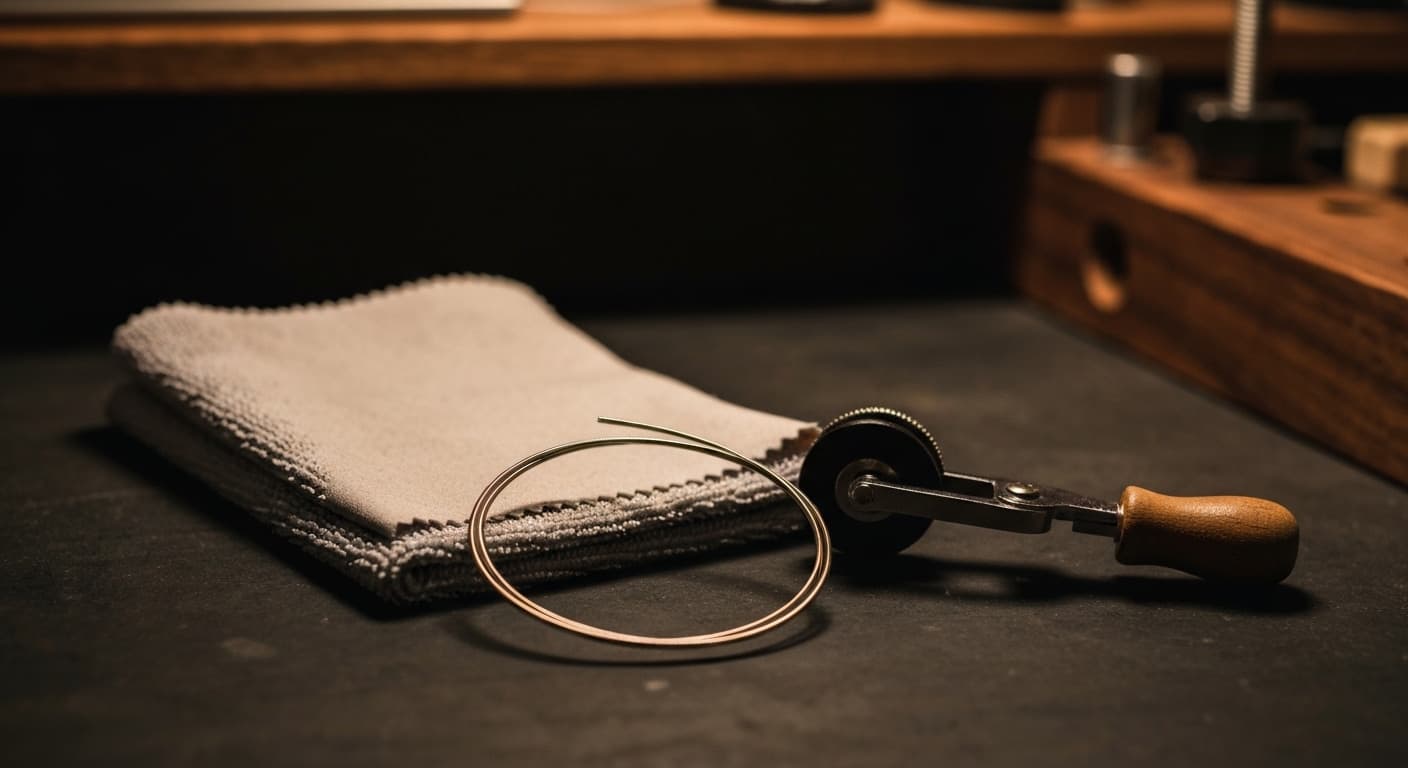
- Remove the strings. A string winder speeds this up and avoids the sharp kinks that come from unwinding by hand.
- Wipe the board with a dry cloth first to lift loose dust and skin oil before adding anything wet.
- For built-up grime, dampen a cloth slightly and work along the grain, not across it. Avoid soaking the wood or letting liquid pool around frets.
- Apply a small amount of fretboard conditioner to a cloth — not directly to the board — and work it in with light pressure, section by section.
- Let it sit for the time the product recommends (usually a few minutes), then wipe off every bit of excess with a clean, dry section of cloth. The board should look slightly richer in color, not wet or glossy.
- Restring and retune once the board feels dry to the touch.
Keep conditioner away from the frets themselves where possible — a little contact with fret metal is fine, but pooling oil against the fret edges doesn't help anything and can migrate onto the neck finish if you're not careful with the cloth.
The Lemon Oil Myth
"Lemon oil" is the most persistent piece of bad advice in fretboard care, and it's worth untangling because the name is misleading on two levels. Actual citrus/lemon oil is a solvent and cleaner, not a wood conditioner — it can strip grime effectively, but it also dries out open-pore wood rather than protecting it, which is the opposite of what a dry rosewood board needs. Meanwhile, most bottles labeled "lemon oil" and sold for guitars aren't pure citrus oil at all — they're a mineral oil base with a small amount of lemon fragrance added, which is closer to an actual conditioner but inconsistent between brands.
Martin Guitar's own FAQ tells owners not to use lemon oil on the fingerboard at all, warning that its acids can break down the guitar's finish and speed up fret corrosion (Martin Guitar FAQ). Cheaper furniture-polish-style "lemon oil" products add another risk: silicones or waxes that build up on the board and complicate future fret work or refinishing. The safer path is a product made specifically for fretboards rather than anything marketed primarily as furniture polish — that's the whole reason dedicated fretboard conditioners exist as a separate category.
Maple Fretboards: A Different Approach
Most maple fretboards are finished — sealed with the same lacquer or poly used on the rest of the neck, specifically because raw maple shows dirt and discoloration far more visibly than darker woods. If your fretboard has a glossy or satin sheen and matches the color of the rest of the neck, it's almost certainly finished, and conditioning oil doesn't belong on it. Oil sitting on top of a sealed finish just smears and attracts dust; it doesn't penetrate anything because there's no exposed grain to penetrate.
Finished maple boards want the same treatment as the guitar body: a wipe with a barely damp cloth for grime, and a finish-safe polish if needed. A microfiber cloth after every session is the single biggest thing that keeps a maple board looking new, since it stops finger oils from ever building up to a level that needs deeper cleaning.
A small number of guitars do use unfinished (raw) maple boards — some Fender custom builds and boutique instruments among them. If you're not sure which you have, check with the manufacturer or a local tech before treating it like rosewood; raw maple can technically take a very light conditioning, but it's the exception, not the rule.
Signs Your Fretboard Needs Attention
- Grayish, pale, or chalky appearance on rosewood or ebony — a sign the board has dried out and lost its natural color
- Fine cracks running along the grain, especially near fret slots, which usually point to a period of low humidity
- Fret ends that feel sharp or proud of the board edge, caused by the wood shrinking slightly while the metal fret doesn't
- A dark, grimy film that doesn't come off with a dry wipe — this calls for cleaning before any conditioning
- Sticky or tacky residue — the opposite problem, usually from over-oiling in the past
If you're seeing dryness symptoms specifically during the winter heating season or right after a period of low humidity, the fretboard is rarely the only thing affected — check whether your guitar's action or neck relief has shifted too, since the same humidity swing that dries the board out often moves the neck.
Recommended gear
Microfiber Polishing Cloths
Keep a cloth set aside just for the fretboard so you're not transferring polish or wax residue from body cleaning onto raw wood.
Common Mistakes to Avoid
- Conditioning too often. Twice a year is a reasonable default for most players; more than that risks oversaturating the wood.
- Using furniture polish or generic "lemon oil." Stick to a product made for fretboards.
- Oiling a finished maple board. If it's glossy and matches the neck finish, it doesn't need oil — it needs the same care as the rest of the guitar.
- Applying oil directly to the board instead of a cloth. This makes it far too easy to over-apply and pool oil around frets.
- Skipping the board entirely during string changes. This is the one moment the board is fully accessible, and it costs almost nothing to check on it while the strings are off.
Making Fretboard Care Part of Your Routine
Fretboard conditioning doesn't need its own calendar reminder if you tie it to something you're already doing. Pairing it with routine string changes means the board gets attention exactly as often as it needs — a few times a year — without extra effort. It's also worth a quick check before long-term storage, since a guitar sitting unplayed for months won't get the finger-oil protection regular playing provides, and a dry storage environment can accelerate cracking on an already-thirsty board.
If you're building out a full setup and maintenance routine rather than handling issues one at a time, our care guides walk through how fretboard care fits alongside the rest of a seasonal maintenance schedule.
The Routine, by Board Type
Fretboard care comes down to matching the treatment to the wood: rosewood and ebony are raw, open-pore woods that benefit from a light conditioner a couple of times a year, while finished maple boards need cleaning, not oil. Skip the lemon oil myth, keep applications light and infrequent, and use string changes as your natural checkpoint. It's a five-minute job a few times a year that prevents the kind of drying and cracking that's much harder to fix once it's started.